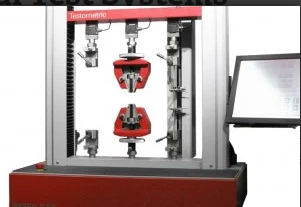
Dual and Triple Universal Test Systems
$56220.00$56000.00
Dual & Triple Universal Test Systems
High-rigidity universal testing systems engineered for high capacity, multi-station throughput and precision material evaluation — ideal for research, quality control, and production laboratories.
Overview
Dual-column and triple-station Universal Test Systems provide superior frame stiffness, larger test envelopes, and flexible multi-test capability. They support tensile, compression, bending, shear, and cyclic tests across a broad range of capacities — from mid-range kN frames to ultra-high-force MN systems.
Key Features
Frame types: Dual-column (high stiffness) and Triple / Multi-station variants for high throughput
Capacity range: 5 kN up to several MN depending on model
High-accuracy force measurement (typically ±0.25 % – ±0.5 %)
Wide crosshead speed range (0.0001 mm/min – 1000 mm/min)
Advanced PC software with multi-station control, real-time graphs, and customizable test templates (ISO, ASTM, EN)
Accessories include extensometers, environmental chambers, custom grips, and fatigue/cyclic modules
Safety features: hardware end stops, software limits, and optional guarding
Typical Technical Specifications
Frame Type: Dual-column / Triple-station / Four-column
Force Capacity: 5 kN – 2 MN
Force Accuracy: ±0.25 % – ±0.5 % of reading
Displacement Resolution: 0.0001 – 0.001 mm
Speed Range: 0.0001 – 1000 mm/min
Data Output: USB, RS-232, Ethernet (CSV, PDF, Excel export)
Standards Supported: ISO, ASTM, EN, JIS
Dual vs. Triple Systems
Dual-Column Systems
Designed for applications requiring high stiffness and large specimen support. Ideal for heavy tensile/compression tests, large samples, and precision measurement.
Higher stiffness and lower deflection
Supports higher capacities (100 kN – MN class)
Compatible with large fixtures and extensometers
Triple / Multi-Station Systems
Designed for efficiency and flexibility — run multiple tests simultaneously from one controller. Perfect for production labs and high-volume QC.
Multi-station productivity (3+ simultaneous tests)
Efficient footprint for laboratory use
Independent control and combined reporting
Benefits
Reliable, repeatable measurement for certification and R&D
Easily reconfigurable for different test types
Improved throughput with multi-station options
Comprehensive data reporting and traceability